
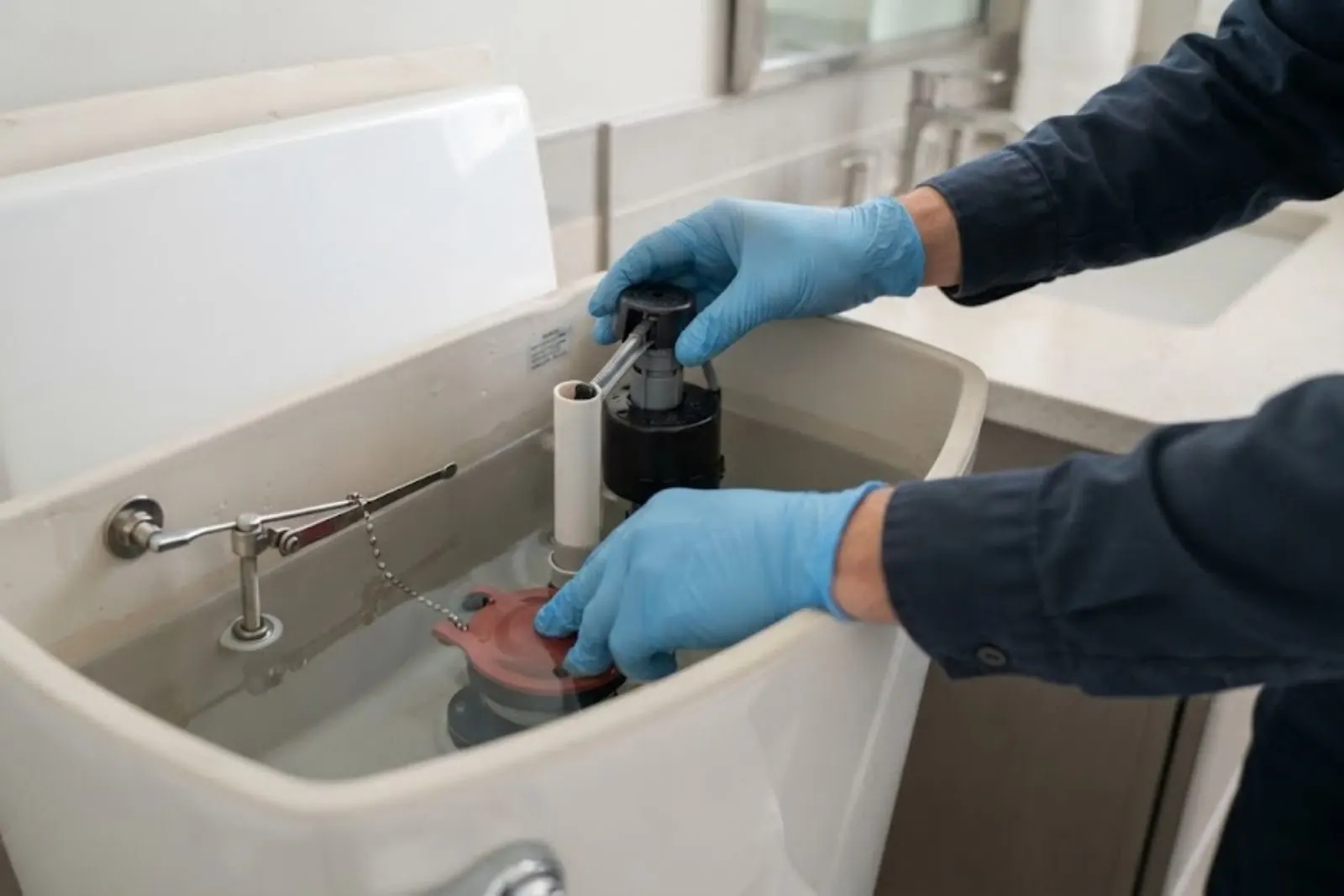
Most toilet failures come down to a short list. A fill valve that never shuts off, a flapper that leaks, a flange that has let the bowl rock, or a clog that sits deeper than a plunger can reach. We sort out which one you have and tell you the price before work starts.
When a toilet is overflowing right now
An overflow gets worse every second the tank keeps refilling. The goal is to stop new water from reaching the bowl, then wait for a plumber. Do not keep flushing to see if it clears.
- Take the tank lid off and lift the float or the rubber flapper chain so the tank stops refilling.
- Turn the oval or round stop valve on the wall or floor behind the bowl clockwise until it is snug.
- If the valve spins freely or will not move, shut off the main house valve and tell us on the phone.
- Lay towels at the base, then bail clean water from the bowl into a bucket only if it is still rising.
- Keep kids and pets out of the room, because bowl overflow can carry sewage and should be cleaned with gloves.
- Call our 24/7 line at (407) 964-8940 and describe whether other drains are gurgling.
Running toilet and a water bill creeping up
A toilet that hisses, refills every few minutes, or trickles after a flush can waste far more water than it seems. The usual causes are a worn rubber flapper, a flapper chain that is too tight, or a fill valve that has stopped sealing.
Try the dye test. Drop a few drops of food coloring in the tank and wait 15 minutes without flushing. If color shows in the bowl, the flapper is leaking. If the tank water climbs to the overflow tube, the fill valve is the culprit.
A running toilet is also a good time to check the supply line and stop valve for drips, which looks like a wet floor tile near the base. That is a different repair, and a slow one can hide under the toilet for weeks. If you see moisture there, our leak detection service can trace where it starts.
Repair it or replace it
Parts are cheap compared with a new toilet, but not every problem is worth a new part. This table shows how we usually think about it.
| What you see | Likely cause | Usual move |
|---|---|---|
| Tank refills nonstop | Worn fill valve or stuck float | Repair: new fill valve |
| Bowl level drops or phantom flushes | Leaking flapper or bad seat | Repair: new flapper |
| Bowl rocks on the floor | Loose bolts or failed flange | Repair: reseat and reset flange |
| Water at the base after flushing | Failed wax ring | Repair: new wax ring or seal |
| Hairline crack in bowl or tank | Porcelain damage | Replace the toilet |
| Weak flush on a very old unit | Worn trapway, outdated design | Replace with a modern toilet |
| Repeated clogs with one fixture only | Partial blockage in the trap | Clear it, then judge replacement |
The four parts that fail most often
Inside a standard two-piece toilet, a handful of parts do almost all of the work. Knowing their names makes the phone call faster.
Fill valve
Refills the tank after each flush and shuts off when the float rises. Mineral buildup and age stop it from closing fully.
Flapper
A rubber seal at the bottom of the tank that lifts to flush. A warped flapper lets water creep into the bowl.
Flange and wax ring
The flange is the ring on the floor that the bowl bolts to. The wax ring seals the joint against sewer gas and water.
Handle and chain
A kinked chain or a loose handle arm can keep the flapper from seating, which looks like a running toilet.
A toilet that wobbles or leaks at the base
A bowl that rocks even a little can break the wax ring seal. Each rock lets a little water, and a lot of sewer gas, slip out under the toilet. You may notice a stain on the floor, a faint smell, or soft flooring around the base.
Tightening the closet bolts sometimes steadies the bowl, but overtightening cracks the porcelain, so stop when the bowl feels snug. If it still moves, the flange may be cracked, rusted or sitting below the finished floor. Tile added later is a common reason a flange ends up too low.
We pull the toilet, inspect the flange, repair or replace it, set a new wax ring, and reseat the bowl level. That is also the moment to check the floor for rot.
Clogged toilet or a deeper line problem
One clogged toilet with every other drain running fine is usually a blockage in that fixture's own trap. A closet auger, which is a short coiled cable with a protective sleeve, often clears it.
Think deeper line when two things happen together. The toilet gurgles when the shower drains, the tub bubbles after a flush, or water backs up in a floor drain. That pattern points to the 3 or 4 inch branch or main sewer line. Plunging will not fix it, and we would move to drain cleaning or a camera look.
If your drain backs up after the washing machine runs, stop using water in the house and call.
Toilet installation and replacement
Replacing a toilet is a good fix when the bowl is cracked, the flush is weak, or you are tired of repeat repairs. The job includes shutting the water, draining and removing the old bowl, scraping off the old wax, checking the flange, setting a new wax ring or seal, and bolting the new bowl down.
Rough-in distance matters. This is the measurement from the wall behind the toilet to the center of the flange bolts, and 12 inches is the most common. A toilet built for a 10 or 14 inch rough-in will not sit right on a 12 inch flange, so we measure before choosing a model.
Height also matters for comfort. Standard bowls sit about 15 inches high, while comfort-height bowls sit near 17 inches. Elongated bowls need a little more floor room than round ones.
What decides the price of a toilet repair
A simple flapper swap and a full toilet reset are very different jobs, and the cost follows the work involved. We give you a clear price before work starts.
Which part failed
A fill valve or flapper is a short repair. A flange repair or floor repair takes longer and uses more material.
Repair or full replacement
A new toilet adds the cost of the bowl itself, plus disposal of the old one.
Age and condition of the shutoff
A seized stop valve or a brittle supply line may need replacing before anything else can be fixed.
Floor condition
Soft subfloor or a low flange from added tile can turn a small job into a larger one.
Time of day
Night and weekend calls through the 24/7 line can be priced differently from same-day appointments when available.
Homeowners insurance usually covers sudden and accidental water damage, but typically not the failed part itself or gradual leaks and wear. Check your policy.
Worth knowing about wax rings and old floors
Casselberry's growth suggests much of the housing probably dates from the 1960s to 1980s, so older toilets and stiff stop valves are common. The county property appraiser record shows your home's build year. If the valve behind the toilet is stiff, do not force it. Our team in nearby Fern Park and Casselberry can replace it first.
Frequently asked questions
Yes. Our 24/7 emergency line takes calls at night and on weekends, and we offer same-day appointments when available. We do not promise a specific arrival time, but we will tell you honestly what to do while you wait.
The flapper is not sealing, the chain is tangled, or the fill valve is not shutting off. Lift the tank lid and watch. If water spills into the overflow tube, the fill valve needs attention.
One toilet that will not drain while everything else works is likely a local clog. Several fixtures gurgling or backing up together points to a branch or main line.
Measure from the finished wall to the center of the floor bolts. Most are 12 inches, but check yours. We confirm the rough-in before ordering or installing a new bowl.
Yes. A cracked supply line or a weeping stop valve is part of toilet repair. A sink that is also leaking may point to a faucet and sink repair visit during the same trip.
Still not sure which answer fits? Describe it to a licensed plumber.
Call (407) 964-8940Standards and sources
Toilet parts must match the fixture maker's specifications for your model, and installation follows the Florida Building Code, Plumbing (8th Edition, 2023). A plumber's license can be checked at MyFloridaLicense.com.