
While you wait, stop running water into the blocked line and keep the washer and dishwasher off. Move rugs and anything valuable away from the low fixture. Every extra gallon you send down a stopped pipe has to go somewhere, usually onto your floor.
Clogged drain or slow drain: what is happening inside the pipe
A drain is a sloped pipe that relies on gravity and a vent to move water away. Most fixtures drain through a 1-1/2 or 2 inch branch line, and those branches join a 3 or 4 inch drain that carries everything out of the house. A clog forms where flow slows down, at a bend, a trap, a joint that sits slightly off, or a spot where the pipe sags.
Slow drains are a warning, not a nuisance. Water that takes a full minute to leave a basin usually means the pipe is already half closed. Soap film, grease and lint coat the wall a little more with every use, until a small hairball or wad of food closes the last gap.
A single slow fixture points to a branch clog close to that fixture. Several slow fixtures, or a gurgle from a drain far from the one you are using, points to the main line. That difference decides whether you need a quick cable job or a longer look with a camera.
Kitchen sink clogged: grease, food scraps and the trap
The kitchen is where most stubborn clogs start. Warm grease runs down the pipe as a liquid, then cools into a waxy layer on the pipe wall. Coffee grounds, rice, pasta and potato peels stick to that layer and build a plug that holds standing water in both sink basins.
The first place to look is the P-trap, the curved section under the sink, usually 1-1/2 inch pipe. You can put a bucket under it, unscrew the two slip nuts by hand, and clear what collects there. If the trap is clean and the sink still holds water, the clog is farther down the wall or under the slab, past where a plunger or hand tool can reach.
Our plumbers feed a cable through the cleanout or the trap arm, break up the grease and food, then run water to confirm full flow. If the disposal hums but does not spin, that is a separate repair, covered under garbage disposal repair.
Cable, hydro jetting or camera: which one fits your clog
No single tool fits every blockage. The right choice depends on what is in the pipe, how long the pipe is and whether this is the first clog or the fifth. The table below shows how we choose.
| Situation | Best first tool | Why |
|---|---|---|
| One sink or tub slow, first time | Cable | A small cable reaches the branch line and breaks through a soft plug fast. |
| Grease coating the whole kitchen line | Hydro jetting | Water pressure scrubs the wall clean instead of poking one hole through it. |
| Clog keeps coming back every few weeks | Camera, then jet | The pipe may be cracked, offset or root-filled. You need to see it first. |
| Several fixtures slow or gurgling | Cable on main, then camera | The blockage is likely in the main line, so we check where it sits. |
| Tree roots suspected in the yard line | Cutting head, then jet | Roots need cutting before water can flush the debris away. |
| Buying a home or unsure of line condition | Camera | A recording shows what the cable and jet cannot tell you. |
Drain snaking and cabling: what it does and where it stops
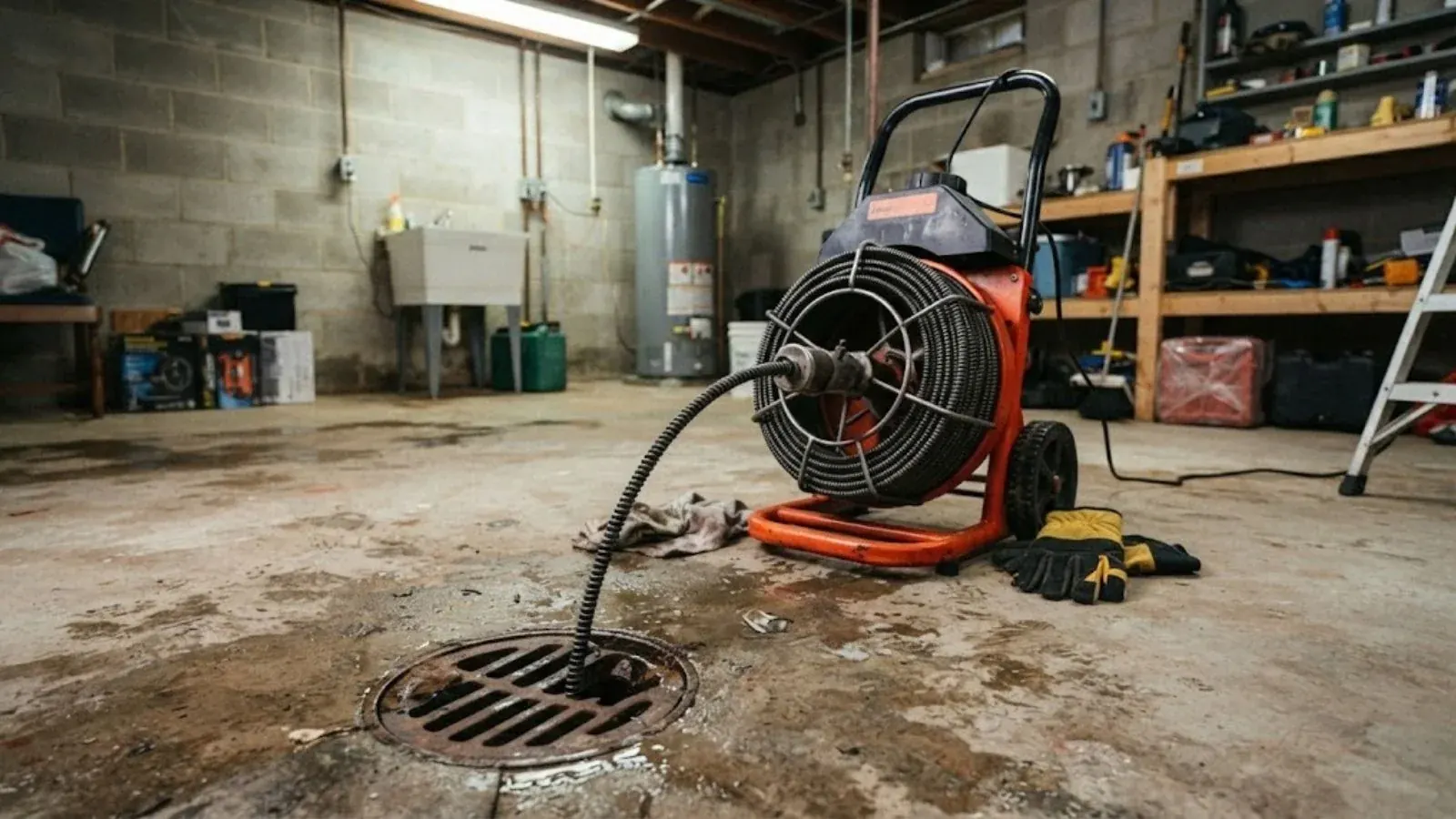
Drain snaking uses a motorized cable, also called a drum machine, with a cutting head on the end. The cable spins as it feeds through the pipe, and the head bores through or hooks onto the clog. Small lines take a cable around 1/4 to 3/8 inch thick, while a 3 or 4 inch main takes a heavier cable around 5/8 inch.
Cabling is quick and works well on a fresh blockage. Its limit is that it opens a channel and does not scrub the pipe. A cable can leave a ring of grease or scale behind, and the next flow can rebuild the plug.
That is why a clog that returns within weeks should not get a third snaking. It calls for hydro jetting after a camera look, because jetting removes the film that keeps feeding the clog. We tell you when a cable is enough and when it is only a short-term fix.
What not to pour down a clogged drain
Liquid drain openers are tempting at midnight, but they often make the next step harder. Most are strong lye or acid products that generate heat and sit in the pipe when the water cannot move. If they fail, the standing water is now caustic, and the plumber who clears it needs gloves and eye protection.
Heat and chemicals can also soften old plastic joints and eat at metal pipes over time. Skip them, and tell the plumber if you already poured some in so we can handle the line safely. Hot water is fine for a fresh grease film, but boiling water can crack a porcelain basin and soften PVC fittings.
The same goes for coffee grounds, eggshells, flour, and anything labeled flushable that is not toilet paper. Wipes do not break down the way paper does, and they wrap around a cable or a pump impeller. Keep them out of the toilet and the trash can is the safest place for them.
Washing machine runs and the kitchen sink gurgles or backs up
One of the clearest signs of a deeper clog is a drain that backs up when a different appliance runs. If the sink burbles, or water rises in the tub after the washing machine pumps out, the shared line is partly closed. Washers push water quickly through a 2 inch standpipe, and that surge needs a clear path.
When a clog sits downstream of every fixture, the fixture lowest in the house, often a tub or floor drain, shows it first. Water takes the easiest exit, so a floor drain or shower pan may gurgle while the sink looks fine. A toilet that bubbles when you drain the tub is another clue that the problem is past the branch lines.
This pattern usually means a main line or building drain issue, and the fix is a longer cable run, often through the main cleanout. If it keeps happening, our sewer line cleaning service covers the larger pipe that carries all of this water away.
Shower and tub drain clogs, and what a drain line leak looks like
Shower and tub drains clog from hair wrapped in soap scum, usually a few inches below the strainer or in the trap. A drain stopper with a lift rod can also trap hair on its linkage. A plastic drain-clearing strip or hair snare can pull out a visible plug, but a deeper blockage past the trap needs a cable.
A drain line leak is a different problem that can look like a clog. Signs include a damp cabinet floor under a sink, a stain on the ceiling below an upstairs bathroom, or a musty smell with no visible water. A leaking drain only runs wet when the fixture is in use, so the stain may come and go.
If you see that pattern, stop using the fixture and call. A camera or leak test finds where the drain is losing water, and our leak detection service can trace a hidden leak before it rots a subfloor.
When a clogged drain is an emergency
Call right away if sewage is coming up in a tub, shower or floor drain, if a toilet overflows and will not stop, or if no fixture in the house will drain. Backed-up wastewater carries bacteria, so keep children and pets out of the area.
A single slow sink can usually wait for a daytime visit. A line that is pushing water back into the house cannot.
- Stop all water use, including the washer, dishwasher, showers and toilet flushing.
- Move rugs, boxes and electronics away from the low fixture or drain.
- Turn off power to any outlet that is standing in water, but only if you can reach the breaker without stepping in it.
- Find the main cleanout, usually a capped pipe near the house or at the property line, and note where it is so the plumber can reach it fast.
- Call the 24/7 emergency line at (407) 964-8940 and describe which fixtures are backing up.
Older Casselberry homes and repeat drain trouble
Census growth suggests much of Casselberry's housing probably dates from the 1960s to 1980s, though the Seminole County property appraiser record shows the actual build year of any one home. Drain lines in homes of that age have had decades of grease, soap and roots to work with. If your clog keeps returning, ask us for a camera look before paying for another snaking.
Where mature trees grow near a yard line, roots can find any small crack or loose joint and thicken until the pipe slows. A camera shows whether the pipe has roots or a crack, which tells you if cleaning is enough or if the line needs repair.
We also clear drains for neighbors in Fern Park and nearby towns, so a Casselberry address is not required for the same service.
What affects the price of drain cleaning
We give a clear price before work starts, after we know what we are dealing with. The factors below are what move the number.
Which drain it is
A bathroom sink branch is a short, easy run. A main line may need a larger cable and more time.
Access to the line
A clean cleanout is quick. When we must pull a toilet or work through a trap, the job takes longer.
Tool used
A cable run costs less than a jetting visit. A camera adds time but shows the real cause.
How severe the blockage is
A soft hair plug clears fast. Packed grease or a root mass takes repeated passes.
Time of day
After-hours emergency calls are handled by our 24/7 line and are priced clearly before we start.
Homeowners insurance usually covers sudden and accidental damage, but typically not the failed part, gradual leaks or wear. Check your policy before you call, and ask us for documentation if you plan to file.
Frequently asked questions
Yes. Our 24/7 emergency line is staffed around the clock, and we offer same-day appointments when available. We do not promise an arrival time, but we dispatch as fast as we can. Call (407) 964-8940 and tell us which fixtures are backing up.
A cable opens a hole through a clog but leaves grease or scale on the wall. That film catches new debris quickly. A camera look followed by hydro jetting usually breaks the cycle, and the camera also shows whether a crack or root is the real cause.
We advise against it. Chemicals sit in a stopped pipe, can damage fittings and make the standing water hazardous for the plumber. If you already used one, tell us so we can wear the right gear.
Gurgling across more than one fixture usually points to the main drain or a vent problem. Air is being pushed back through traps as water struggles to leave. A main line clog often needs a longer cable or a camera inspection.
Not for a first-time slow sink. It is worth it when a clog returns, when several fixtures are involved or when you suspect roots or a broken pipe. A camera inspection shows the cause so you pay to fix the right thing.
A clog holds water or slows it. A leak lets water escape, so you may see a damp cabinet, a ceiling stain or a musty smell while the drain still runs. If you see wetness without a standing-water problem, stop using the fixture and call for leak testing.
No. The disposal is usually fine, and the clog sits in the trap or the line past it. If the disposal hums but will not spin, that is a separate repair.
Still not sure which answer fits? Describe it to a licensed plumber.
Call (407) 964-8940Standards and sources
Drain and vent work in Florida follows the Florida Building Code, Plumbing (8th Edition, 2023). For permit questions in Casselberry, ask the City of Casselberry Building Division. You can confirm any plumber's license at MyFloridaLicense.com using Verify a License.