
When a sink in your Casselberry, FL home will not drain and the stopper, strainer and trap are clean, the blockage is usually somewhere you cannot see. The likeliest causes are a vent that is not letting air in, a trap pitched the wrong way, a partial clog farther down the branch, a kinked disposal or dishwasher connection, or a main line problem.
A smart homeowner works up a ladder from easy to serious. This guide gives that ladder, tells you what is safe to try, and points out the signs that mean you should stop and call.
The diagnostic ladder: start at the top and stop when you find it
Each rung rules something out. Work in this order so you do not take a trap apart when the real fault is a vent or a shared line.
| What you notice | Likely cause | Safe first check |
|---|---|---|
| Gurgle after the sink empties | Blocked or undersized vent | Listen at the vent stack on the roof side of the wall, do not climb |
| Water drains, then rises in a second basin | Disposal or dishwasher connection | Check the dishwasher knockout plug and the air gap |
| Slow only when the dishwasher runs | Shared branch partly blocked | Run the sink alone, then the dishwasher alone |
| Trap holds standing water, fixture is slow | Trap misaligned or sloped wrong | Look under the cabinet for a dip or an offset |
| Tub, toilet and sink all slow | Main line problem | Flush one toilet and watch the lowest drain |
| Smell of sewer gas at the sink | Dry trap or failed vent | Run water for a minute and check the smell again |
Gurgling means the drain is breathing wrong
Every drain needs air behind the water. A vent pipe, usually 1 1/2 or 2 inches, runs up through the roof and lets air in as water leaves. If the vent clogs with leaves, a bird nest or debris, the water has to pull against a vacuum, so it drains slowly and the trap gurgles.
You can often tell by sound. A glug as the sink empties, or bubbles in a nearby toilet, points toward venting. This is not a place for a DIYer on a Florida roof. A plumber can run a cable down the vent from above or check it with a camera.
A trap that looks fine but sits wrong
A P-trap should hold a small plug of water that blocks sewer gas. The trap arm that leaves it must slope down toward the wall at about a quarter inch per foot. If the arm is too flat, solids settle. If it is too steep, water races past and leaves the solids behind.
Remodels cause this a lot. A new vanity or a shifted cabinet can pull the trap out of line without anything looking broken. Look for a dip in the pipe, a trap higher than the wall stub, or two traps in a row.
Partial clogs farther down the branch
A clog does not have to be solid to slow a sink. A film of grease and soap can narrow a 1 1/2 inch pipe to the width of a finger. Water still passes, only slowly, and a plunger or a quick look under the sink shows nothing.
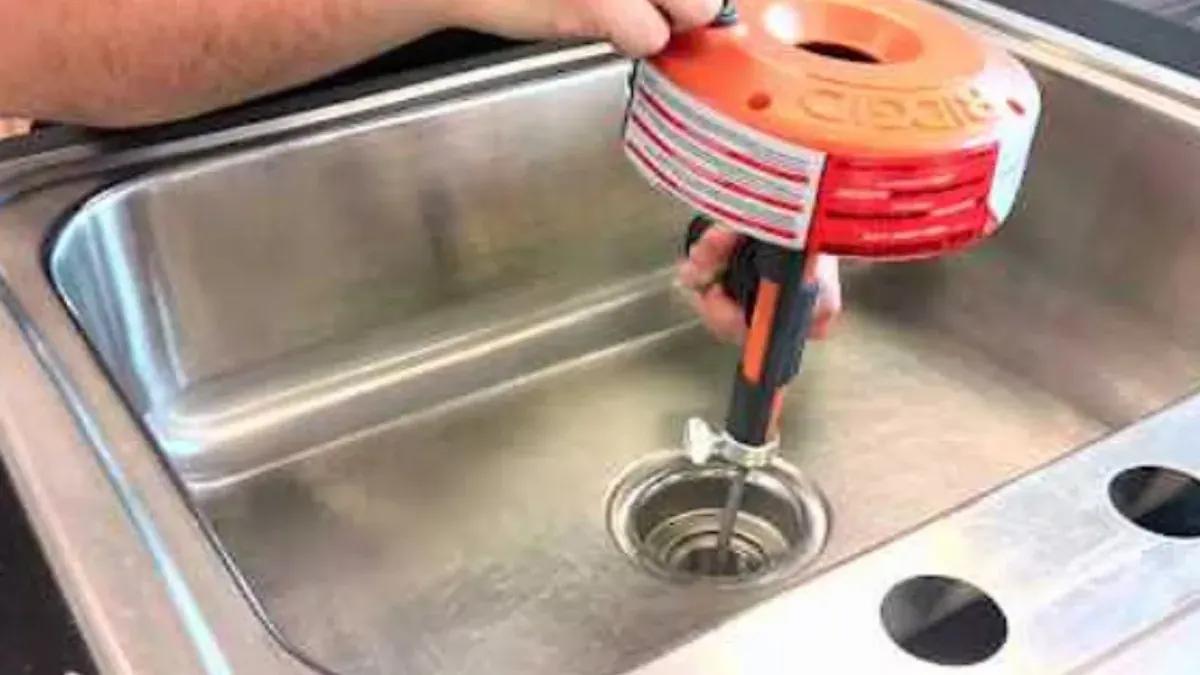
A small hand cable can reach this layer, and it is the right first tool if the symptom is limited to one fixture. If it comes back within weeks, a professional drain cleaning visit that scours the pipe wall is a better fix than another quick poke.
Disposal and dishwasher connections: check these in a kitchen
- Run the sink with the disposal off, then on. If only the disposal side is slow, the disposal outlet or its baffle is the issue.
- Open the cabinet and look for a kinked dishwasher drain hose that droops below the disposal inlet.
- Confirm the knockout plug inside the disposal was removed when the dishwasher was installed.
- Look for a high loop or an air gap on the dishwasher drain. Without one, dirty water can drift back toward the sink.
- Pour a pot of hot water down the drain, not boiling water on PVC joints, and watch how it clears.
- Do not run a snake through the disposal. Unplug it first and use the hex key slot on the bottom to free a jam.
What to try tonight, and in what order
- Run only the slow sink and listen for gurgling. Note whether any other fixture changes sound.
- Plunge with a flat-bottom plunger, covering the overflow hole with a damp rag so pressure goes down the pipe.
- Put a bucket under the trap, unscrew the slip nuts by hand and look for a dip, a gasket stuck in the pipe, or a buildup of sludge.
- Reassemble with the washers in place and the arm sloping toward the wall, then run water for two minutes and check for drips.
- Run a bucket of hot tap water through the sink and compare the drain speed to before.
- If the water drains but the problem comes back within a day, stop and book a visit rather than repeating the same fix.
What not to do
Skip bottled drain openers. They can sit in a slow drain, damage old metal traps and make your plumber's job riskier. Do not pour a vinegar and baking soda mix on a standing sink and expect it to clear a vent or a misaligned arm. Chemicals fix none of the problems on this page.
When the problem is the main line
If several fixtures slow down together, or the lowest drain in the house bubbles when you flush a toilet, the problem is probably past the branch. Water from every fixture heads for a single 3 or 4 inch line, and a partial block there shows up in the weakest outlet first.
Stop running water and book a visit. A sewer line cleaning with a camera confirms whether it is grease, roots or a break, and a plumber can then match the fix to the cause.
What decides the cost of finding a hidden slow drain
Diagnosis time and the final fix are priced separately when the cause is not obvious.
How many fixtures are affected
One slow sink is a branch job. Several slow fixtures is a main line job with different tools.
Location of the problem
A vent fault means roof access. A trap fix means cabinet access. A cleanout fix means yard work.
Tools needed
A hand cable, a camera, a drum machine and a jetter each take different time and cost.
Pipe condition
Old, rough or offset pipe holds debris and may need repair after clearing.
Whether it repeats
A first-time slow drain is cheaper to fix than one that has been rebuilt by years of grease.
Homeowners insurance usually covers sudden and accidental damage, but typically not a worn pipe or a gradual drain problem. Check your policy. We give a clear price before work starts.
Casselberry notes: lakes, irrigation and where water goes
Casselberry has more than 30 lakes and ponds, including Lake Howell, Lake Kathryn and Lake Concord, so some yards likely sit near wet ground. A soggy lawn near the house can point to an irrigation leak or a failing sewer line, and a sink that drains slowly at the same time is a reason to check both rather than assume one.
The City of Casselberry Utilities Department can tell you how your bill is structured and whether your property has a separate irrigation meter. If a drain problem shows up with a bill that climbs, ask the department what your usage looks like before you blame the sink.
Sources and standards used: City of Casselberry Utilities Department page, City of Casselberry parks and lakes information
Frequently asked questions
The clog may be past the trap, or a vent may not be letting air in. A trap pitched the wrong way can also slow the drain. A plumber can trace each one in turn.
Yes. Without air behind the water, drainage is sluggish and the trap often gurgles. Leaves or nests in a roof vent are a common cause, and clearing it is a roof job for a professional.
The dishwasher drains through the sink branch, so a partly blocked branch or a plugged disposal inlet pushes water back up. Check the knockout plug and the hose loop. If those are fine, the branch likely needs cleaning.
Plumbing inside your home is the owner's job. You can ask the City of Casselberry Utilities Department about your bill or about who is responsible for the line outside your property. Do that after a plumber confirms where the blockage sits.
Still not sure which answer fits? Describe it to a licensed plumber.
Call (407) 964-8940Plumbing help for this problem
Related services:
Nearby towns we serve: