
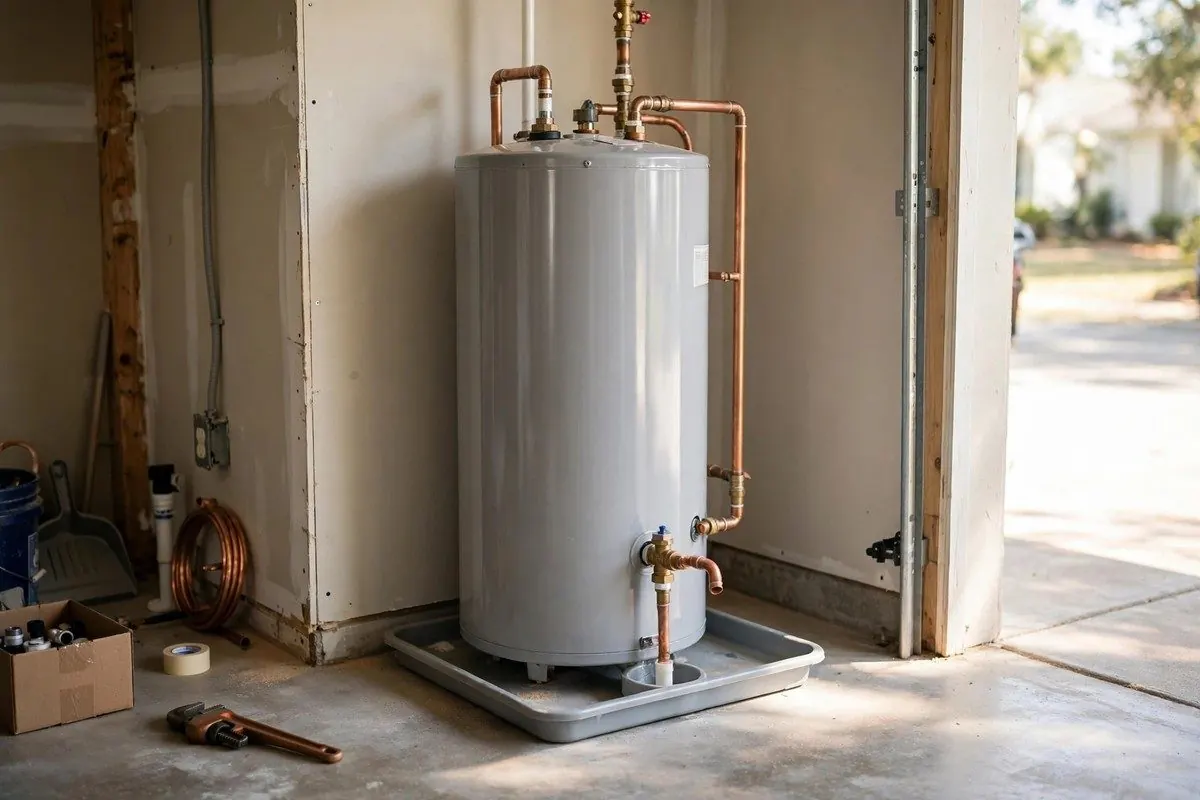
A hybrid hot water heater, also called a heat pump water heater, is an electric tank heater with a heat pump bolted on top. Instead of making all its heat with electric elements, it pulls warmth from the surrounding air and moves it into the water. Backup elements switch on when demand is high or the air is too cold.
That design changes what the unit needs from your house. It needs room, airflow, a drain for condensate, and tolerance for some fan and compressor noise. This guide explains how it works, the modes you will see on the display, and a plain comparison against standard electric and gas tanks. If you are weighing a swap, our water heater replacement service can walk through the fit.
How a heat pump water heater actually works
Think of a refrigerator running in reverse. A fan pulls room air over a coil, a refrigerant absorbs the heat, a compressor concentrates it, and a second coil releases it into the tank water. The air leaving the unit comes out cooler and drier than it went in.
Because the unit moves heat instead of making it, it uses less electricity than a resistance element for the same hot water. A typical unit holds 50 to 80 gallons, stands taller than a standard tank because of the heat pump head, and has the same cold-in and hot-out connections you already know.
Hybrid vs standard electric vs gas: side by side
No type wins in every house. This table shows where each one stands on the points that decide most swaps.
| Point | Hybrid heat pump | Standard electric | Gas tank |
|---|---|---|---|
| Heat source | Air plus backup elements | Electric elements | Gas burner |
| Space needed | Large, with open air around it | Small closet is fine | Small, plus a flue |
| Noise | Fan and compressor hum | Nearly silent | Quiet burner sound |
| Condensate drain | Required | Not needed | Not needed |
| Recovery speed | Slower in heat pump mode | Fast | Fast |
| Upfront equipment cost | Higher | Lower | Middle |
| Needs a flue | No | No | Yes |
Space and air: the part people overlook
A heat pump needs a lot of air to pull heat from. Manufacturers typically call for several hundred cubic feet of open space around the unit, and a tiny closet can strangle it. The unit also needs several inches of clearance for the filter and the service panel.
A garage or an open utility room often works well, because the unit cools the room a little and that cool air is a free benefit in summer. A sealed closet may need louvered doors or ducting. The manual states the minimum room volume and clearances, and those numbers decide whether your spot works.
Checking whether your spot works
Run through this list before you shop. It takes ten minutes and can save a failed install.
- Measure the height, width, and depth of your current heater and compare with the new unit's published dimensions.
- Measure ceiling clearance, since the heat pump head adds height and the top needs breathing room.
- Estimate the open air around the heater and compare it with the maker's minimum room volume.
- Look for a floor drain or a nearby drain line for condensate, or plan a small pump.
- Check the electrical panel for a free double-pole breaker slot, since most units use a dedicated 240-volt circuit.
- Think about where the fan noise lands, such as a bedroom wall.
Condensate and noise: two things to plan for
Pulling heat from damp air makes water. A heat pump water heater drips condensate from its coil, usually a small amount on a humid day, and the unit has a drain port for it. That line should run to a floor drain, a laundry standpipe, or a condensate pump. A kinked or clogged line can overflow into the pan.
Noise is real but modest. Expect a hum similar to a small dehumidifier or a window air conditioner. Mount it away from a bedroom wall if you can. The sound you hear is the fan and compressor, not the water.
The modes on the display, in plain terms
Names differ by maker, but the choices fall into four groups. Your manual lists the exact labels.
Heat pump only
Uses the air-source system alone. Slowest recovery, lowest electric use, best for steady households.
Hybrid or auto
Uses the heat pump first and adds the elements only when the demand climbs. A good default.
High demand or boost
Fires the elements and heat pump together for fast recovery after heavy use, such as guests or long showers.
Vacation or away
Holds the tank at a low temperature while you are gone, then returns to normal on the date you set.
What drives the cost of a hybrid water heater swap
Equipment price is only the start. These factors shape the final quote, and several are specific to heat pump units.
Unit size and efficiency tier
Larger tanks and higher-efficiency models cost more than basic units.
Electrical work
A gas-to-electric swap may need a new circuit, breaker, or panel space.
Condensate route
A nearby drain is cheap, while a pump or a long line adds parts and labor.
Location and access
Hauling an 80-gallon unit up a narrow stair or into an attic is slower than a ground-level garage.
Removal and code updates
Taking out the old tank, its flue, and any outdated valves adds work.
Homeowners insurance usually covers sudden and accidental damage, but typically not the failed part itself or gradual leaks and wear. Check your policy if a tank failure has damaged flooring.
Pros and cons to weigh before you buy
Read these honestly against your own house, not against a sales brochure.
- Pro: it moves heat instead of making it, so it needs less electricity than a standard element tank.
- Pro: no flue, no gas line, and no combustion exhaust to manage.
- Pro: it cools and dries the room air slightly, which is welcome in a hot garage.
- Con: it is taller, heavier, and louder than a standard electric tank.
- Con: it needs a condensate drain and a clean air filter.
- Con: recovery is slower in heat pump mode, so large households may need boost mode now and then.
When a standard tank is the better answer
If your water heater sits in a tight closet, if the nearest drain is far, or if you rarely use hot water in volume, a standard tank may fit better. We will say so plainly. For a gas-to-electric switch or a tank in an unusual spot, our water heater installation crew checks the circuit and the drain before quoting.
We serve Winter Park and Fern Park as well as Casselberry, and a same-day appointment is possible when available.
Casselberry notes: older homes, newer appliances
Casselberry's population jumped in the 1960s and 1970s, which suggests that much of the housing likely dates from the 1960s to 1980s. A home from that era may have a small utility closet or an older panel with limited free slots. Check the open air around your heater and the panel before you shop. The county property appraiser record shows your home's actual build year.
Permit rules vary, so ask the Casselberry Building Division at 95 Triplet Lake Drive, open Monday through Thursday, 7 a.m. to 6 p.m., or use its online portal. If a licensed contractor does the swap, the contractor uploads a state license, workers' compensation proof or exemption, liability insurance, and a business tax receipt with the application.
Sources and standards used: City of Casselberry Building Division page and permit portal information, U.S. Census population and housing unit counts cited on the city fact sheet
Frequently asked questions
Yes, the two names describe the same appliance. Hybrid refers to the mix of a heat pump and electric backup elements in one tank.
Most need a dedicated 240-volt circuit with a double-pole breaker, like a standard electric tank. Some smaller models run on a standard 120-volt outlet, so check the model's data plate.
Yes. Heat pump units perform well in warm air, and the cooler air they exhaust is a mild side benefit. The manual lists the allowed temperature range for the room.
Keep the air filter clean, flush or check the condensate line, test the temperature and pressure relief valve once a year, and have the tank anode checked on the maker's schedule.
We cannot say for any one house. Older homes often have small utility closets, so measure the space and compare it with the unit's published room volume and clearance. If the numbers are tight, a standard tank or a tankless unit may suit the home better.
Still not sure which answer fits? Describe it to a licensed plumber.
Call (407) 964-8940Plumbing help for this problem
Related services:
Nearby towns we serve: